For those of you younger adults who have been contemplating making a move away from home, your best bet may be to check out one of these cities that are among the top 5 hottest places for young people to move to. Of course you could always try it out and come back- there's no place like home, right?
~~
From the Wall Street Journal
WORK & FAMILYSEPTEMBER 30, 2009.
The Next Youth-Magnet Cities
By SUE SHELLENBARGER.
If you were a recent college graduate in a recovering economy launching a career, looking for a mate or both, where would you choose to live?
Predicting cities that will emerge as post-recession meccas for the young is easy to argue about, but impossible to forecast empirically. Whether you prefer hip, casual Austin, Texas, over the cosmopolitan allure of New York City is partly a matter of personal taste. Still, we asked six experts which 10 cities will emerge as the hottest, hippest destinations for highly mobile, educated workers in their 20s when the U.S. economy gets moving again. Our panelists—demographers, economists, geographers and authors on urban issues—picked their cities based on the criteria they deem most important, from economic diversity to lifestyle.
Big cities dominate our panelists' forecasts. Where trendy smaller cities might have captivated youth in the past, today's recession-scarred young people are more pragmatic, placing "greater emphasis on where high-quality, high-paying jobs are created," says Ross DeVol, director of regional economics for the nonprofit Milken Institute. Northeastern and West Coast cities are ascendant, eclipsing former Sunbelt favorites such as Atlanta.
Journal Community Discuss: In the wake of the recession, what cities offer the most to young professionals? .
Other cities once lauded as youth magnets fell off the radar. Naples, Fla., cited in an influential 2003 U.S. Census Bureau report on migration among young adults, was bypassed by panelists, a victim of the sagging Florida economy. The housing collapse sank another past favorite, former real-estate boom town Las Vegas. And Charlotte, N.C., a banking center, lost some of its luster to the financial crisis.
Quirky urban cultures haven't entirely lost their allure. Our panelists' No. 4 pick is a city with double-digit unemployment—Portland, Ore., a haven for artists, musicians and outdoor enthusiasts. The city has shown "staying power" among youth, says Rachel Franklin, a geographer at the University of Maryland and author of the Census Bureau report.
Where young adults settle is no small thing. People 18 to 29 are the most mobile age group, and their past migration patterns have defined the future of regions, from the long rural exodus of the 1900s to the Silicon Valley boom of the 1990s. Youth-magnet cities gain an enviable cultural allure and a labor-market edge.
The young are likely to be more restless than usual when the recovery comes. The recession has brought migration to a grinding halt: Fewer people moved across state lines in 2008 than at any time since 1950, when the population was smaller by half, says William Frey, a senior fellow at the Brookings Institution, a nonprofit Washington research organization.
Here's a look at our survey's top five cities:
First Place (Tie): Washington, D.C.
The 2008 election touched off a youthful pilgrimage to the capital that most panelists say won't end soon. "In the eyes of some young people, Barack Obama is America's coolest boss," says Richard Florida, author of "Who's Your City?" and a professor of business and creativity at the University of Toronto's Rotman School of Management.
Government hiring is projected to grow fast, and jobs in lobbying, aerospace, defense contracting and professional services are also a draw. Mr. DeVol calls Washington the national leader in high-tech services, surpassing Silicon Valley. Washington's 4,000-plus nonprofits hold appeal for service-minded youth. And amid rising regulation of financial markets, says Barbara Lang, president of the DC Chamber of Commerce, "much of Wall Street is now moving to K Street."
David Gibson Jr., 25 years old, passed up finance jobs in Charlotte, New York and Atlanta to settle in Washington as a financial analyst for the Federal Reserve. Mr. Gibson, who has an M.B.A., figures the capital, with its many universities, can accommodate him for the long haul, enabling him to pursue a Ph.D. if he chooses. He loves the city's museums and live jazz and R&B venues, he says, and its power-center status is helping him "expand my network world-wide."
That combination of factors, says David Plane, a professor of geography and regional development at the University of Arizona, signals "sustained dynamism" for Washington.
The downside: Not all see the current federal hiring binge continuing. "Right now Washington is a magnet. It has become the new New York," says Steven Cochrane, managing director of Moody's Economy.com. But the ballooning federal deficit suggests that "by next year, the government is going to be looking seriously at making cuts."
First Place (Tie): Seattle
Former Ohio residents Lane Kuhlman, 26, and her husband, Matt Mansbach, 32, mulled several cities, including New York and Chicago, as potential destinations last summer, after Ms. Kuhlman received her master's degree specializing in interactive media.
In their eyes, none could match Seattle's combination of a diverse high-tech sector, cultural life, access to rugged natural terrain and a strong university presence. Ms. Kuhlman has since taken a post as a new-product researcher for Microsoft, and Mr. Mansbach is weighing attending one of the city's grad schools in his field, computer animation. Meanwhile, Ms. Kuhlman says, "we're only 15 minutes from a beautiful waterfall, and there are amazing places to hike."
Anchor to a region of corporate innovators, from Amazon.com to Starbucks, Seattle is "a high-tech and lifestyle mecca," Dr. Florida says. Mr. DeVol says the city's high-tech sector, with 226,300 workers, is just slightly smaller than Silicon Valley's. Joblessness, at 7.7%, remains relatively low. City officials see rapid growth in biotech; Seattle also has tens of thousands of jobs in music and interactive media. And it enjoys a reputation as home to a lot of brainy people.
The downside: It rains half the time.
Work & Family MailboxSue Shellenbarger answers readers' questions. How We Selected Our Top-Rated CitiesNaming the next wave of top cities for hip, highly mobile young adults is far from an exact science. It's more like a parlor game.
The Wall Street Journal sought out six of the nation's leading experts to rank the 10 U.S. cities they see as most likely to emerge as "youth magnet" cities after the recession—popular target destinations among young, college-educated, often single people setting out to start a career, find a mate or both.
The panelists, who were also asked to provide two or three reasons for their selections, were chosen based on their achievements in research, forecasting or authorship in the fields of geography, regional economics or demography.
The methodology used to compile a final list is closer to a straw poll than a scientific study.
Using criteria of their own choosing, experts provided ranked lists of picks. Composite rankings were then assigned to cities based on a point system: Each expert's No. 1 pick was given 10 points, second choices were given nine points and so on, with 10th-place picks receiving one point. Final rankings were determined by adding the total points each city received.
The panelists:
Steven Cochrane , managing director, Moody's Economy.com, head of the Web site's U.S. regional forecasting service and editor of its monthly Regional Financial Review.
Ross DeVol , director of regional economics, the Milken Institute, a Santa Monica, Calif., nonprofit, and researcher on technology and its impact on regional and national economies.
Richard Florida , author of "Who's Your City" and "The Rise of the Creative Class," and director of the Martin Prosperity Institute at the University of Toronto's Rotman School of Management.
Rachel Franklin , senior lecturer, public policy, at the University of Maryland; former deputy director of the Association of American Geographers, and author of a 2003 Census Bureau report on migration patterns among young, educated workers.
William Frey , demographer and senior fellow at the Metropolitan Policy Program of the Brookings Institution, Washington, D.C., and a research professor in population studies at the University of Michigan.
David Plane , professor of geography and regional development, University of Arizona, Tucson; a senior editor of the Journal of Regional Science, and researcher on age-related factors in migration.
.
Third Place: New York
Reeling from the financial crisis, the nation's largest city may seem an unlikely pick. But one reason New York's unemployment rate is stuck at a daunting 10.3% is that hopeful job seekers continue to move there, city officials say. Clearly, "the city's mythic status as a place to test one's mettle against the best and the brightest" remains intact, Dr. Florida says.
New York hasn't lost as many financial-services jobs as predicted, says Deputy Mayor Robert Lieber; so far, fewer than half of the 293,000 job losses that were projected by the city from 2009 through mid-2010 have materialized. Residential growth in boroughs outside Manhattan, such as Brooklyn, is making the city marginally more affordable, and some panelists see housing prices falling more.
At Vermont's Middlebury College, New York surpasses nearby Boston as the destination of choice for the class of 2010, says Jaye Roseborough, career-services director. Allison Bailey, a 2009 grad, loves the city's "European lifestyle," she says. After studying in France, "I wanted to be in a 'walking city' like Paris." Working lots of overtime as a litigation assistant for a law firm, she can manage the $1,450 monthly rent for her Manhattan studio, she says. And she is happy to leave behind the long car commutes of her native Houston.
The downside: The city is still unaffordable for many, and the less-pricey suburbs can impose enervating commutes.
Fourth Place: Portland, Ore.
Los Angeles native Ryan O'Leary, 23, didn't expect when he graduated from college with a journalism degree last year to be working construction at this point, he says. But he decided about a month ago to give top priority to moving to the place he most wanted to live, and Portland was it—despite its daunting 11.2% unemployment rate.
Mr. O'Leary, who found an apartment downtown, calls his move "the best decision I've made in a long time." He loves the city's nightlife and neighborhoods, and the city's streetcars—one of which stops by his building—are a refreshing change from Los Angeles's car culture. He continues to job-hunt in his field, public relations, on his days off.
A symbol of "West Coast hipness," Ms. Franklin says, Portland has continued to draw migrants through the recession. An urban-growth boundary fosters a strong downtown culture while containing suburban sprawl, easing travel to nearby mountains and forests. Portland has expanded mass transit and boasts sizeable electronics and activewear companies, several wind- and solar-energy firms, and many green-building projects.
Its quirky culture appeals to musicians and artists: The city has more than its share of oddball events, including an adult soap-box derby and an urban Iditarod (wherein costumed revelers pull shopping carts). "Keep Portland Weird" is a popular bumper sticker. Although Austin claimed that motto first in the 1980s, "we live it pretty well here," says a city staffer.
The downside: While regional officials have laid plans to add 10,000 jobs in the next five years, Portland has done better at promoting its quality of life than fostering job growth. "As nice as it may be to live in Portland," says Economy.com's Dr. Cochrane, "you can only sleep on someone's couch for so long. At some point you have to get a job."
Fifth Place: Austin, Texas
After a year spent traveling and working overseas in 2007, New Jersey resident Olga Garcia, 26, and her boyfriend, Kevin Kurkjian, 27, debated places to settle. Then Kevin announced, "Olga, I've got it figured out: We're going to Austin." She agreed. Both had heard from friends that Austin offered housing and career opportunities and a welcoming, youthful culture. "I had never heard anything bad about Austin," says Ms. Garcia, a marketing consultant.
A state capital and the site of a big University of Texas campus, Austin has become a gathering place for tech- and arts-conscious young adults. Its SXSW media and arts conference, and its Austin City Limits music festival, draw hundreds of thousands of visitors each year. Both unemployment and the cost of living are relatively low. And with significant high-tech, videogame and renewable-energy sectors, Mr. DeVol calls Austin "a model for a thriving 21st-century knowledge-based community."
The downside: Some panelists have doubts about how strongly Austin will rebound after the recession.
Showing posts with label where to live. Show all posts
Showing posts with label where to live. Show all posts
Friday, October 9, 2009


Monday, May 25, 2009
Which is the Most Affordable City to Buy a Home in?
Pick me, pick me!
"For the 15th consecutive quarter, Indianapolis led the nation's large cities (population 500,000 and up) in home affordability. The Indiana capital tops the list due to very reasonable home prices and relatively high median income: Nearly 95% of all homes sold were affordable to those earning the metro area's median income of $68,100."
"For the 15th consecutive quarter, Indianapolis led the nation's large cities (population 500,000 and up) in home affordability. The Indiana capital tops the list due to very reasonable home prices and relatively high median income: Nearly 95% of all homes sold were affordable to those earning the metro area's median income of $68,100."
Friday, May 15, 2009
America's Best Bargain Cities
Look who tied for #5!
Nearly a decade ago, after making a donation to a volunteer-run radio station in Austin, Texas, local librarian Red Wassenich was asked why he chose to support a broadcaster with a penchant for playing strange crooner music. "Because it keeps Austin weird," he said.
Since then, the phrase "Keep Austin Weird" has become the city's official rallying cry against the establishment of large chain stores near mom-and-pop shops--and, more generally, for maintaining the city's eccentric feel. The city may be weird, but perhaps more redeeming is that it's also a bargain to live there: Austin is the place where people pay the least to get the most.
"Austin has always been really different from the rest of Texas," says Wassenich, 59.
He's talking about the city's weirdness, but he might as well be talking about its affordability and profusion of job opportunities. Four other Texas cities make the list of America's Best Bargain Cities, but none come close to Austin, whose 5.5% unemployment is the best in the country and about half the national average.
Behind the Numbers
To determine which U.S. cities are the best bargains, Forbes looked at the country's 50 largest U.S. metropolitan statistical areas and metropolitan divisions--geographic entities defined by the U.S. Office of Management and Budget used by federal agencies in collecting, tabulating and publishing federal statistics.
Washington, D.C., rounds out the top three, thanks to an employment rate rivaled only by Austin. That comes as no surprise to Lee.
Lone Star Constellation
Back in Austin, though, residents are facing a different sort of challenge: To keep the city weird--and to themselves.
 2. Phoenix, Ariz.
(Phoenix-Mesa-Scottsdale, Ariz.)
Cost of Living: 13 of 50
Housing Opportunity: 14 of 50
Unemployment Rate: 6 of 50
Average Salary: 21 of 50
 3. Washington, D.C.
(Washington-Arlington-Alexandria, D.C.-Va.-Md.-W.Va.)
Cost of Living: 38 of 50
Housing Opportunity: 21 of 50
Unemployment Rate: 2 of 50
Average Salary: 4 of 50
 4. Fort Worth, Texas
(Fort Worth-Arlington, Texas)
Cost of Living: 16 of 50
Housing Opportunity: 10 of 50
Unemployment Rate: 8 of 50
Average Salary: 34 of 50
 5. Cincinnati, Ohio (tie)
(Cincinnati-Middletown, Ohio-Ky.-Ind.)
Cost of Living: 9 of 50
Housing Opportunity: 7 of 50
Unemployment Rate: 23 of 50
Average Salary: 33 of 50
 5. Indianapolis, Ind. (tie)
(Indianapolis-Carmel, Ind.)
Cost of Living: 13 of 50
Housing Opportunity: 1 of 50
Unemployment Rate: 17 of 50
Average Salary: 41 of 50
Read on for more lists, rankings and real estate coverage including stories on America's most overpriced cities and places where homeowners are the most in debt.
Click here to see the full list of America's Best Bargain Cities.
~~~~
Provided by Forbes.com
Zack O'Malley Greenburg
Thursday, May 14, 2009
Thursday, May 14, 2009
Try these places if you want to get the most for your money
Nearly a decade ago, after making a donation to a volunteer-run radio station in Austin, Texas, local librarian Red Wassenich was asked why he chose to support a broadcaster with a penchant for playing strange crooner music. "Because it keeps Austin weird," he said.
Since then, the phrase "Keep Austin Weird" has become the city's official rallying cry against the establishment of large chain stores near mom-and-pop shops--and, more generally, for maintaining the city's eccentric feel. The city may be weird, but perhaps more redeeming is that it's also a bargain to live there: Austin is the place where people pay the least to get the most.
"Austin has always been really different from the rest of Texas," says Wassenich, 59.
He's talking about the city's weirdness, but he might as well be talking about its affordability and profusion of job opportunities. Four other Texas cities make the list of America's Best Bargain Cities, but none come close to Austin, whose 5.5% unemployment is the best in the country and about half the national average.
Behind the Numbers
To determine which U.S. cities are the best bargains, Forbes looked at the country's 50 largest U.S. metropolitan statistical areas and metropolitan divisions--geographic entities defined by the U.S. Office of Management and Budget used by federal agencies in collecting, tabulating and publishing federal statistics.
We assigned points to metro regions across four data sets: Average salary for workers with a bachelor's degree or higher, from PayScale.com; annual unemployment statistics, from the Bureau of Labor Statistics; cost of living, from Moody's Economy.com; and the Housing Opportunity Index, from the National Association of Home Builders/Wells Fargo, which measures the amount of homes sold in a given area that would be affordable to a family earning the local median income based on standard mortgage underwriting criteria.
Austin earned high marks across the board.
"They have the triple-whammy of being a university town, a state capital and a technology center," says Al Lee, director of quantitative analysis at PayScale.com, a salary data aggregator based in Seattle. "It makes for a very robust economy and a great place for people to work."
Second on our list is Phoenix, Ariz., but what makes this city affordable isn't quite the same formula as in Austin. The real estate bust left the desert oasis as one of America's emptiest cities, which has also driven down home prices. As a result, Phoenix is one of the most affordable big cities in the nation.
Washington, D.C., rounds out the top three, thanks to an employment rate rivaled only by Austin. That comes as no surprise to Lee.
"Between defense spending under Bush and stimulus spending under Obama, it's been an incredibly strong time," he says.
Further on, the list includes a few places that may raise an eyebrow or two. Ritzy Cambridge, Mass., clocked in at No. 11 because of extremely high salary scores, while Detroit's rock-bottom housing costs earned the city a No. 15 rank--despite an astronomical 13% unemployment rate. That's roughly twice Austin's rate.
Lone Star Constellation
While the capital of Texas graced the top of our list, the rest of the state's large cities performed admirably too. All five of Texas' biggest burgs--Houston, San Antonio, Dallas and Ft. Worth--were among the top 10 best bargains. Not a single city in Texas ended up on our list of most overpriced places.
Part of the reason is that Texas offers some of the best incentives for entrepreneurs looking to start or move a business, according to Eduardo Martinez, a senior economist at Moody's Economy.com. Like Phoenix, Texan metros "have picked up a lot of California companies that have left because of high operating costs," he says.
Still, the state's future is far cloudier than its big blue skies. Martinez warns that Texas is vulnerable because of its exposure to America's foundering auto industry via manufacturing. The Lone Star State may also be aversely affected by the expected decrease in defense spending as contracts won in the Bush years begin to expire.
Still, the state's future is far cloudier than its big blue skies. Martinez warns that Texas is vulnerable because of its exposure to America's foundering auto industry via manufacturing. The Lone Star State may also be aversely affected by the expected decrease in defense spending as contracts won in the Bush years begin to expire.
Back in Austin, though, residents are facing a different sort of challenge: To keep the city weird--and to themselves.
"Tell people not to move here!" says Wassenich.
In Depth: America's Best Bargain Cities
 1. Austin, Texas
(Austin-Round Rock, Texas)
Cost of Living: 3 of 50
Housing Opportunity: 24 of 50
Unemployment Rate: 1 of 50
Average Salary: 20 of 50
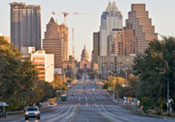 1. Austin, Texas
(Austin-Round Rock, Texas)
Cost of Living: 3 of 50
Housing Opportunity: 24 of 50
Unemployment Rate: 1 of 50
Average Salary: 20 of 50
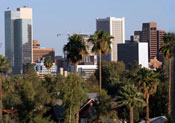 2. Phoenix, Ariz.
(Phoenix-Mesa-Scottsdale, Ariz.)
Cost of Living: 13 of 50
Housing Opportunity: 14 of 50
Unemployment Rate: 6 of 50
Average Salary: 21 of 50
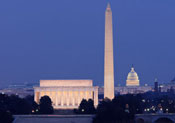 3. Washington, D.C.
(Washington-Arlington-Alexandria, D.C.-Va.-Md.-W.Va.)
Cost of Living: 38 of 50
Housing Opportunity: 21 of 50
Unemployment Rate: 2 of 50
Average Salary: 4 of 50
 4. Fort Worth, Texas
(Fort Worth-Arlington, Texas)
Cost of Living: 16 of 50
Housing Opportunity: 10 of 50
Unemployment Rate: 8 of 50
Average Salary: 34 of 50
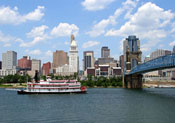 5. Cincinnati, Ohio (tie)
(Cincinnati-Middletown, Ohio-Ky.-Ind.)
Cost of Living: 9 of 50
Housing Opportunity: 7 of 50
Unemployment Rate: 23 of 50
Average Salary: 33 of 50
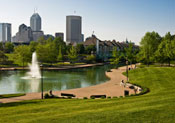 5. Indianapolis, Ind. (tie)
(Indianapolis-Carmel, Ind.)
Cost of Living: 13 of 50
Housing Opportunity: 1 of 50
Unemployment Rate: 17 of 50
Average Salary: 41 of 50
Read on for more lists, rankings and real estate coverage including stories on America's most overpriced cities and places where homeowners are the most in debt.
Click here to see the full list of America's Best Bargain Cities.
Subscribe to:
Posts (Atom)